
Commercial Water Well Drilling
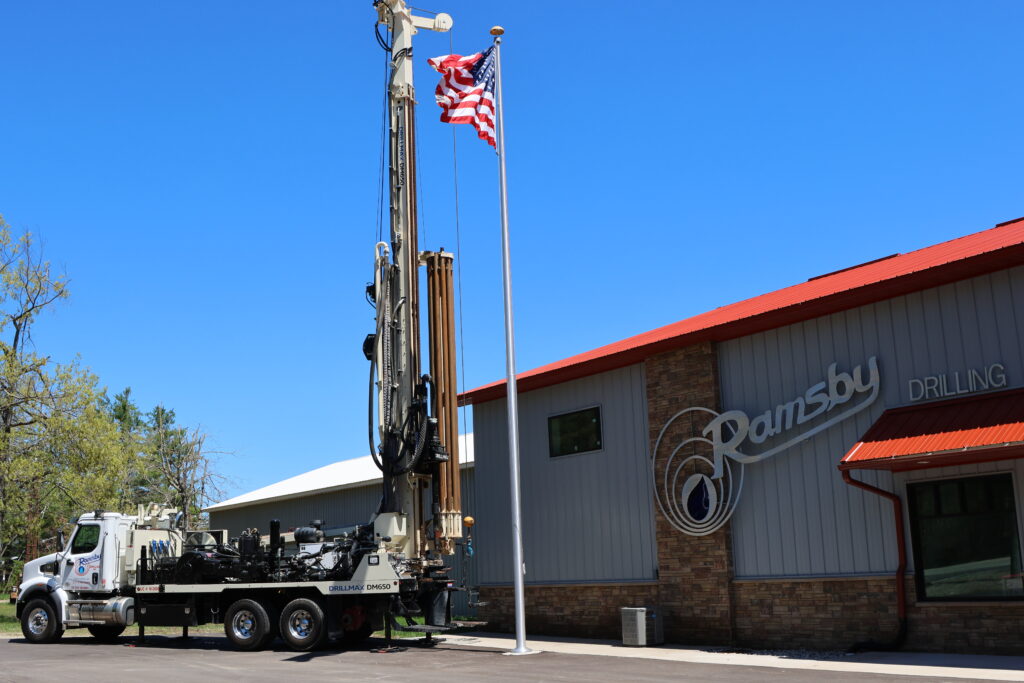
Commercial Water Well Drilling is made easy with Ramsby Drilling because we possess the equipment and expertise necessary for a variety of commercial applications including geothermal, agricultural, marine and industrial wells. We have the capacity to drill wells up to 24″ in diameter and to depths of up to 1,500 feet in the smaller diameters. Our specialized services include vertical ground loops for closed geothermal, injection wells for open geothermal, ground water monitoring wells, fuel-spill recovery wells, core drilling for marine blast holes, caisson and piling placement, wells for snowmaking, golf course irrigation, multi-housing sites, and geophysical exploration for oil and gas companies.
What to Expect When Getting Your Commercial Water Well Installed
1. Site Assessment:
Geological survey to identify aquifer location and depth.
Check for potential contamination sources (septic tanks, landfills).
2. Permitting:
Obtain permits from local or state authorities (requirements vary by region).
3. Drilling:
Drilled until a reliable water-bearing zone is reached.
4. Casing and Screen Installation:
A steel or PVC pipe (casing) is inserted to prevent collapse and contamination, and a screen filters out sediment while allowing water to enter the well.
5. Grouting:
A cement seal (grout) is placed around the casing to prevent surface water contamination.
6. Development:
Well is cleaned of debris and fine particles using air or water to increase yield.
7. Pump Installation:
A submersible or jet pump is installed to draw water from the well to the home.
8. Testing:
Water is tested for flow rate and quality (bacteria, nitrates, minerals).
Have more questions about your water well installation?
How is Getting a Commercial Water Well Installed Different Than Residential?
Although the general process of installing a water well is fairly similar for both commercial and residential sites, there are a few things you need to keep in mind with commercial water well drilling.
Regulations & Permits
To begin with, regulations and permits are different. Commercial wells often face stricter regulations due to higher water usage and potential impact on local aquifers. Permitting requirements are typically more involved for businesses. You may need one or more of the following: environmental impact assessments, water rights documentation, and/or public health safety inspection paperwork.
Water Usage & Capacity
Residential wells are usually sized for a single household (low to moderate usage) while business wells (especially for agriculture, manufacturing, or hospitality) require larger pumps, deeper wells, and higher yield systems to meet daily demand.
Testing & Water Quality
Not only are initial regulations and permits more strict with commercial properties, but they also might need to meet stricter water quality standards, especially if the water is used for food service or public consumption at places like schools, hotels, daycares, etc. More frequent testing is often required for business wells compared to residential ones as well.
Design & Infrastructure
Business well systems may require storage tanks, filtration or treatment systems, and backup pumps or systems.
Overall Cost
Commercial wells are usually more expensive to install because they typically require greater depth & diameter, higher-grade materials, and additional infrastructure.
Need commercial water well services at your business?

- 231-238-5895
- sales@ramsbydrilling.com
- 1865 S Straits Hwy, Indian River, MI 49749
- Monday - Friday 8:00 a.m. - 5:00 p.m.
- 231-238-5895
- sales@ramsbydrilling.com
- 1865 S Straits Hwy, Indian River, MI 49749
- Monday - Friday 8:00 a.m. - 5:00 p.m.